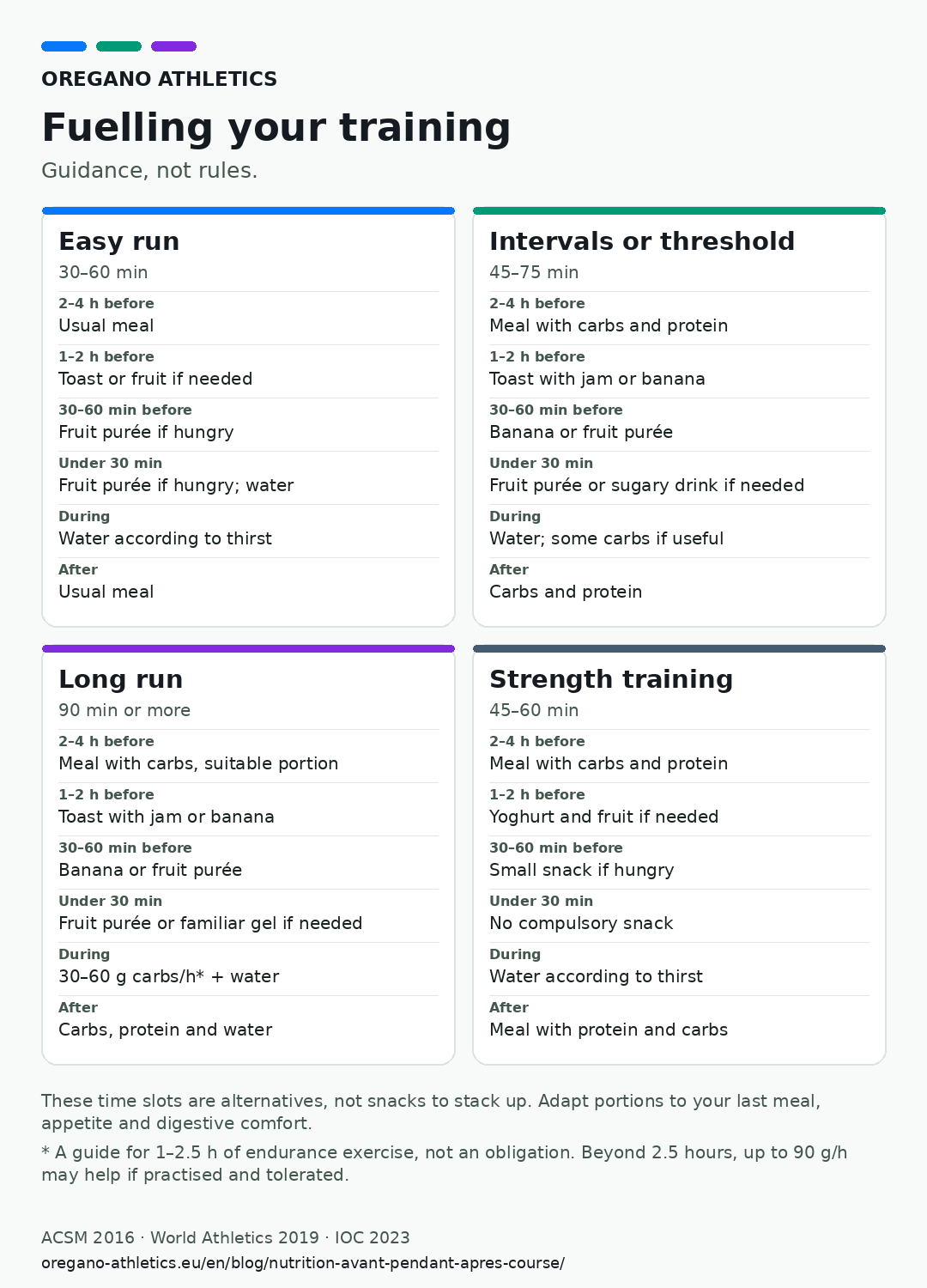
I am about to train
Easy run
30–60 min- 2–4 h before
- Usual meal
- 1–2 h before
- Toast or fruit if needed
- 30–60 min before
- Fruit purée if hungry
- Under 30 min
- Fruit purée if hungry; water
- During
- Water according to thirst
- After
- Usual meal
Intervals or threshold
45–75 min- 2–4 h before
- Meal with carbs and protein
- 1–2 h before
- Toast with jam or banana
- 30–60 min before
- Banana or fruit purée
- Under 30 min
- Fruit purée or sugary drink if needed
- During
- Water; some carbs if useful
- After
- Carbs and protein
Long run
90 min or more- 2–4 h before
- Meal with carbs, suitable portion
- 1–2 h before
- Toast with jam or banana
- 30–60 min before
- Banana or fruit purée
- Under 30 min
- Fruit purée or familiar gel if needed
- During
- 30–60 g carbs/h* + water
- After
- Carbs, protein and water
Strength training
45–60 min- 2–4 h before
- Meal with carbs and protein
- 1–2 h before
- Yoghurt and fruit if needed
- 30–60 min before
- Small snack if hungry
- Under 30 min
- No compulsory snack
- During
- Water according to thirst
- After
- Meal with protein and carbs
These time slots are alternatives, not snacks to stack up. Adapt portions to your last meal, appetite and digestive comfort.
* A guide for 1–2.5 h of endurance exercise, not an obligation. Beyond 2.5 hours, up to 90 g/h may help if practised and tolerated.
Before: eating is not the same as overeating
Regular meals are often enough for an easy run. If you train early or your last meal was some time ago, a small snack can help. Before a hard or long session, prioritise carbohydrates to support muscle energy supply. The closer the start, the more useful familiar, easy-to-digest foods become. Neither gels nor two plates of pasta are compulsory. [1, 2]
During: duration matters
Short, easy runs generally require no carbohydrate feeding during exercise. Small amounts can help during sustained hard efforts of 45–75 minutes. A range of 30–60 g/h is mainly a guide for endurance exercise lasting 1–2.5 hours; beyond that, intakes up to 90 g/h may support performance, using suitable carbohydrate sources and progressive gut training. Drink according to needs, heat and sweating, without forcing excessive fluid intake. [1, 2]
After: prepare for the next session
A meal with carbohydrates, protein and water is a useful starting point. For example, rice, eggs and vegetables, or bread, yoghurt and fruit if the next meal is a while away. When two hard sessions are close together, starting recovery promptly matters more. Otherwise, there is no need to rush for a shake: your intake across the day matters. [1, 2]
Women and masters: eat enough
Insufficient energy availability can affect bone health, recovery and hormonal function in both women and men. Repeated fasted training or restricting carbohydrates without compensating for energy expenditure should not be normalised. After 40, protein and strength training help maintain muscle, but needs do not suddenly change on your fortieth birthday. Evidence specific to masters and different stages of women’s lives remains limited: individualise rather than impose rules based on age or cycle phase. [2–5]
When to seek professional advice
Persistent fatigue, repeated bone injuries, unexplained performance decline or menstrual disturbances warrant medical assessment. This guidance is for healthy adults; if pregnant, breastfeeding, living with diabetes or experiencing disordered eating, seek individual advice from a health professional. It does not replace an individual dietetic assessment.
Scientific references
- Thomas DT, Erdman KA, Burke LM. Nutrition and Athletic Performance (2016).
- Burke LM et al. IAAF Consensus Statement: Nutrition for Athletics (2019).
- Mountjoy M et al. IOC consensus statement on REDs (2023).
- ISSN position stand: nutritional concerns of the female athlete (2023).
- Dietary Intake of Masters Athletes: A Systematic Review (2023).